Mujin Story: From Inception to Global Automation
From a 41㎡ garage in Tokyo to powering the world's first unmanned warehouse. How Mujin revolutionized industrial robotics through autonomous machine intelligence.
Since its founding in 2011, Mujin has pursued an uncompromising mission: revolutionizing industrial robotics through machine intelligence and motion planning.
Traditionally, deploying factory robots required months of tedious manual teaching by highly trained technicians. Mujin set out to develop the universal “robot brain”—software that enables off-the-shelf industrial arms to perceive their environment, generate collision-free trajectories on the fly, and adapt to unpredictable physical conditions in milliseconds.
Born in Tokyo, yet staffed by top talent from over 20 countries with more than half the team hailing from outside Japan, Mujin is a uniquely global deep-tech company. How did two founders from completely different worlds turn an impossible dream into an international robotics powerhouse?
Here is the story of Mujin’s inception, breakthroughs, and rapid global expansion from a 41㎡ Tokyo garage to international robotics leadership.
🧭 Milestone Overview
1. The Spark & Founders (2009–2011)
Fateful encounter between robotics prodigy Rosen and sales ace Issei.
2. First Break & Series A (2011–2012)
The high-stakes Denso demo, first order from Canon, and UTEC Series A.
3. Assembling the Dream Team (2012–2014)
MIT joiners, a 41㎡ garage office, and the Portuguese “Mujin Hero.”
4. Pivoting to Logistics (2014–2016)
The ASKUL alliance, Pick Worker controller, and the Robot Award.
5. World's First Unmanned Warehouse (2017–2018)
JD.com 40,000㎡ Shanghai facility and major venture accolades.
6. Global Scale & Strategic MBO (2018–2019)
PALTAC, Fast Retailing (UNIQLO), and long-term independence.
7. US & Europe Expansion (2020–2022)
Mujin Corp. in Atlanta, Nagoya expansion, and corporate rebranding.
8. Series C & Accenture JV (2023–2024)
$104M Series C, Mujin Europe in Netherlands, and Accenture Alpha Automation.
9. Physical AI & MujinOS (2024–Present)
$233M Series D megaround and the universal OS for Physical AI.
1. The Spark: Meet the Founders (2009–2011)
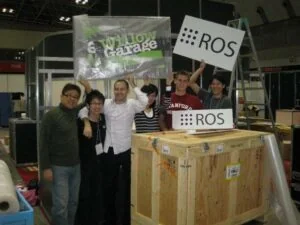

Polar Opposites Crossing Paths
Dr. Rosen Diankov, Co-Founder and CTO, graduated top of his class at UC Berkeley, skipped his Master’s, and earned his Ph.D. from Carnegie Mellon University. Today, he is recognized worldwide as a pioneer of real-time autonomous motion planning algorithms (creator of OpenRAVE).
Co-Founder and CEO Issei Takino followed an entirely different trajectory. After university in the United States, his fascination with Warren Buffett led him to join ISCAR, an Israeli precision cutting-tool manufacturer acquired by Berkshire Hathaway. Serving demanding industrial plants across Japan, Issei established himself as an elite sales leader.
Their paths converged at the 2009 International Robot Exhibition (iREX) in Tokyo. Rosen was demonstrating PR2 robots for Willow Garage (the creators of ROS), while Issei had been recruited as a bilingual sales specialist for the booth. Standing side-by-side, Rosen was struck by Issei’s commercial acumen and ability to cut straight to what factory customers genuinely cared about. Rosen knew immediately: “If I ever start a business, it has to be with Issei.”
“I Was Ready to Go to Hell and Back with Him”
Initially, Issei politely declined—he was thriving in his sales career. But Rosen refused to take no for an answer. After returning to the U.S., Rosen sent persistent emails, eventually flying back to Japan and showing up directly at Issei’s family home in Osaka.
💬 Issei Takino: “Nobody can guarantee whether a startup will succeed. But when someone possesses this degree of unyielding determination, you know that even after crashing into concrete walls, you will pick yourselves up and keep fighting. I was ready to go to hell and back with Rosen.”
Gathering 1 million yen in seed capital, they registered the company in July 2011 as MUJIN (a blend of Mujin [unmanned] and Mujinzou [limitless potential]).
2. First Customer & Series A Funding (2011–2012)
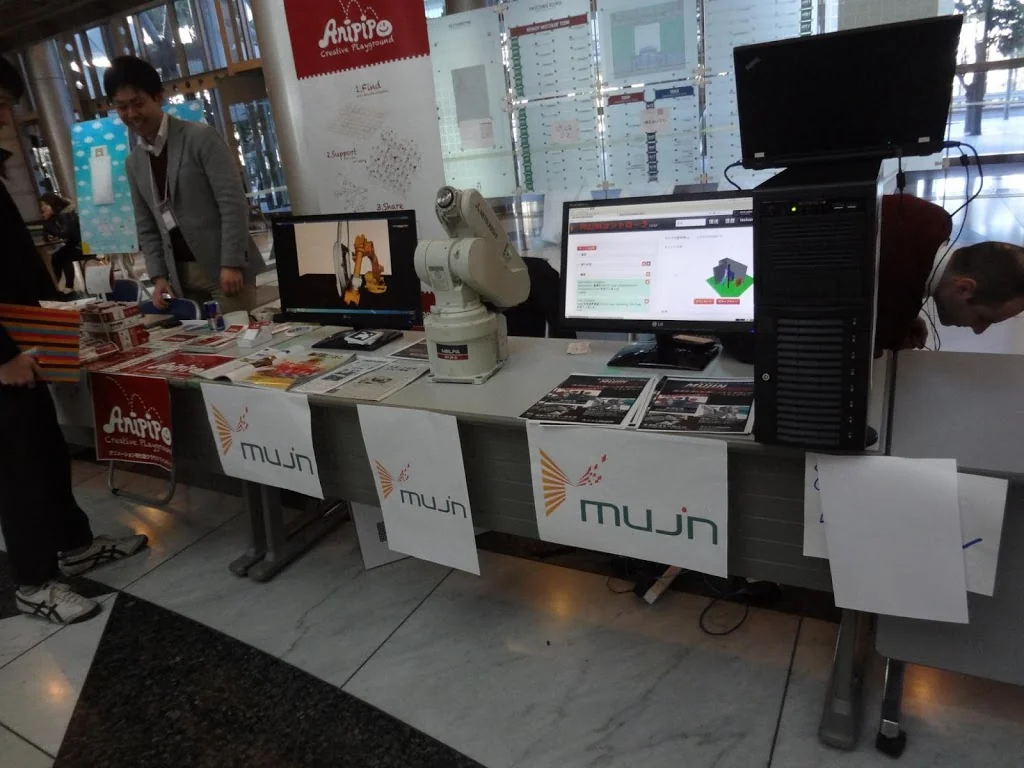
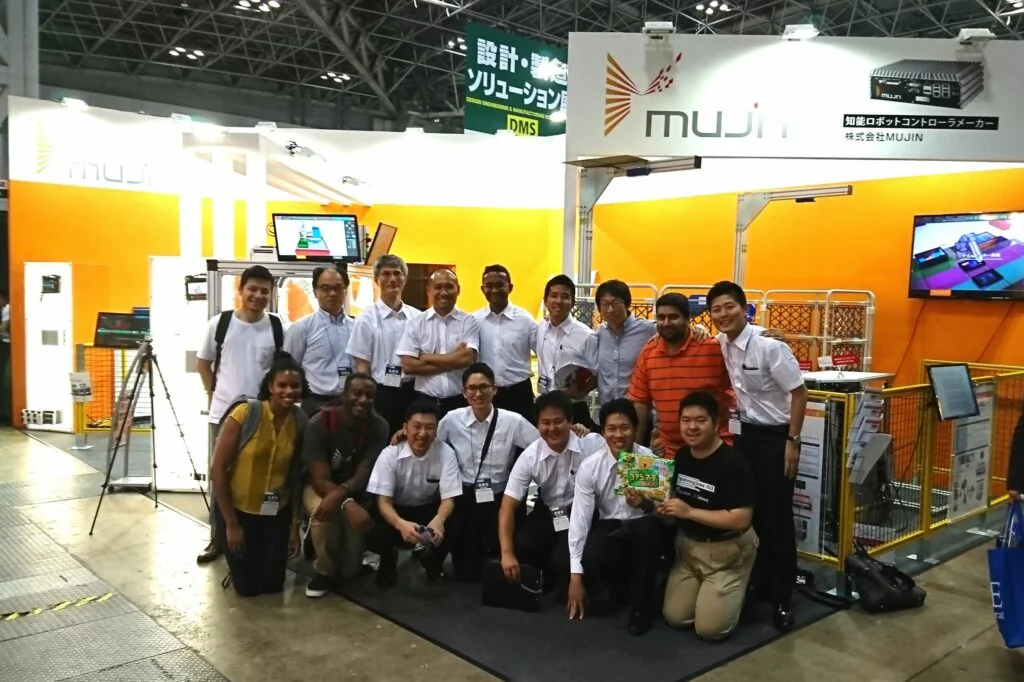
“Buy Me 20 Minutes!” The Denso Wave Showdown
In late 2011, the founders secured a critical demonstration opportunity in front of executives at leading robot manufacturer Denso Wave. Days before the meeting, their algorithmic software still refused to run. After pleading for a two-week extension, demo day arrived—and the software was still failing.
As Issei drove toward the venue, Rosen was in the passenger seat battling carsickness while furiously typing code. “I need 20 minutes—stall them with small talk and presentation slides!” Rosen begged.
At the venue, Issei paced before the executive panel, presenting Mujin’s vision at length. As the audience grew visibly restless and Issei prepared to offer a formal apology, Rosen finally hit the start button. Miraculously, the demo sprang to life, executing flawless robot trajectories to unanimous praise.
Landing Canon and 75M Yen Series A with UTEC
Denso Wave was so impressed that they encouraged Mujin to host a small one-table reference exhibit at iREX 2011. Issei bought two plain white shirts and hand-stitched “MUJIN” across the chest for their first uniform.
At the booth, Canon managers stopped by. Seeking to optimize robot cycles across manufacturing lines, Canon believed in the young startup’s vision and awarded Mujin its first commercial contract.
In August 2012, The University of Tokyo Edge Capital (UTEC) completed rapid due diligence and invested 75 million yen in Series A funding, setting Mujin’s journey in motion.
3. Assembling the Global Dream Team (2012–2014)
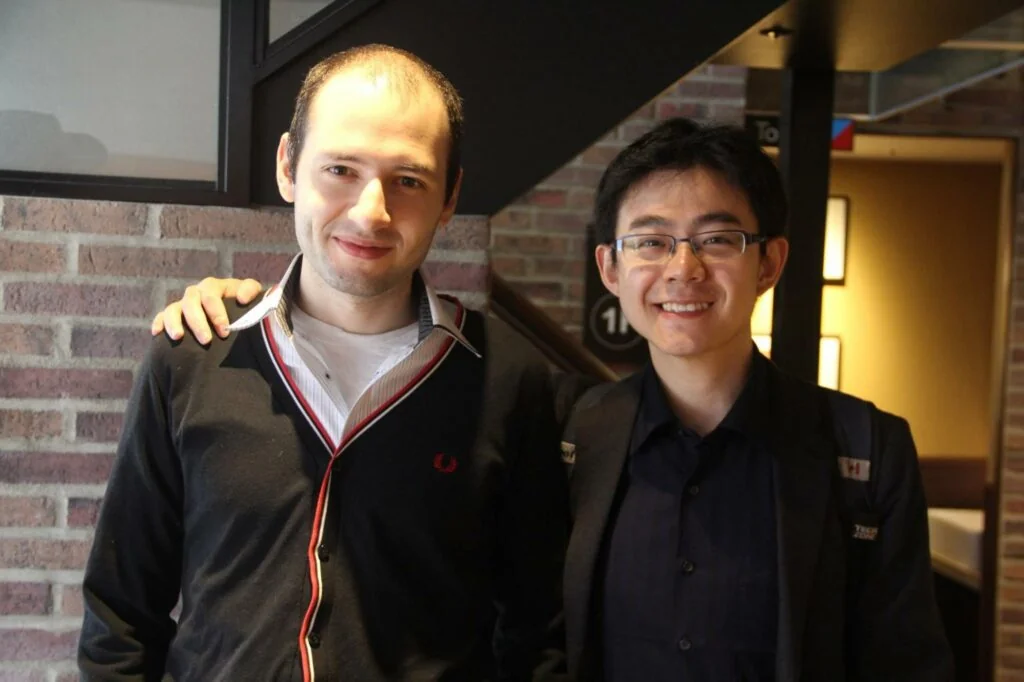
Top Global Minds Drawn to Tokyo
In summer 2012, Huan Liu, an MIT graduate researcher (former President of Mujin China), visited Tokyo. After staying up all night discussing robotics with Rosen, Huan was completely won over. Within one month, he resigned from his job and university in the U.S. and relocated to Tokyo.
Top talents from Carnegie Mellon, Stanford, MIT, Paris, and Tokyo University soon followed, drawn by the audacity of the mission.
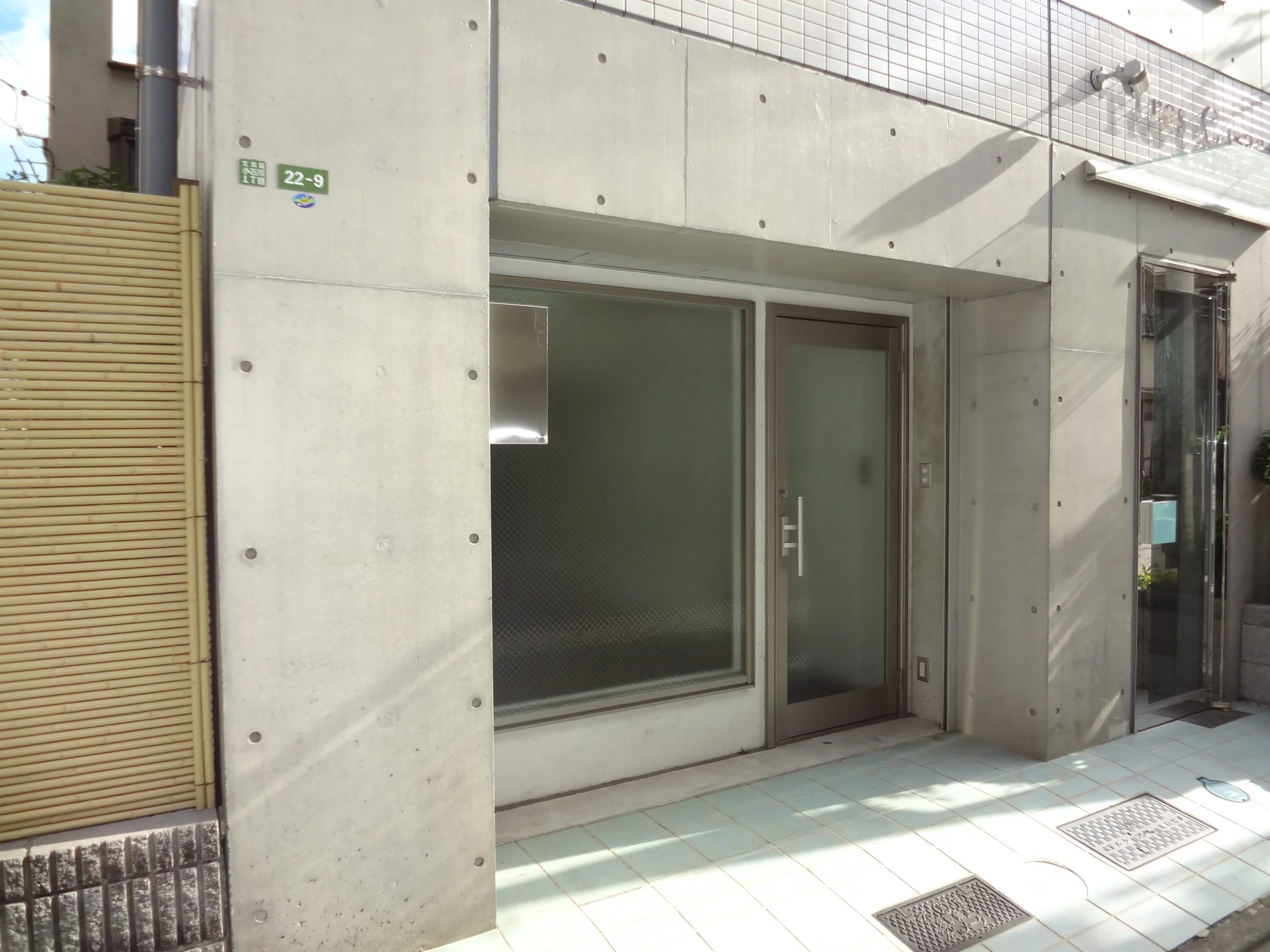
41㎡ Garage & The “Mujin Family” Culture
Our first headquarters in Koishikawa was a 41-square-meter garage. Whenever an industrial robot was placed on the floor, it blocked the hallway—engineers had to step outside the building and enter through the rear door just to talk to someone on the other side of the room.
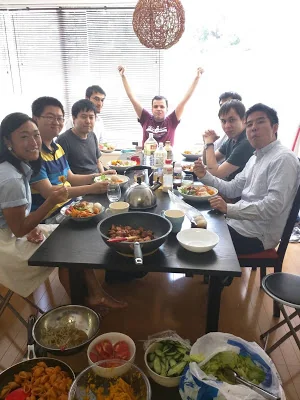
To support international engineers living in Japan without friends or family, Issei cooked hearty dinners every night, handled visa paperwork, and helped them find apartments. This deep empathy formed the bedrock of the “Mujin Family” culture.
The Portuguese “Mujin Hero” at DMS 2014
Two days before the 2014 Design & Manufacturing Solutions Expo (DMS), our bolt-picking demo broke down due to vision calibration errors. Rosen phoned an algorithmic researcher in Portugal with whom he had collaborated at CMU.
The engineer booked the next flight out of Lisbon, landed at Haneda Airport on the morning of the exhibition, and located and fixed the bug within two hours before doors opened. The demo was a runaway triumph, and he earned the company title of “Mujin Hero,” eventually joining Mujin full-time.
4. Pivoting to Logistics Automation (2014–2016)
“Pick Worker” Controller & The METI Robot Award
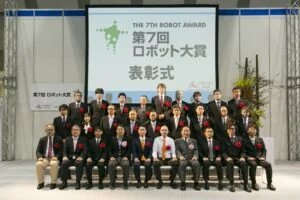
In 2014, JAFCO and UTEC invested 600 million yen in Series B funding. In January 2015, Mujin launched “Pick Worker,” the world’s first hardware-agnostic intelligent robot controller. By generating collision-free trajectories dynamically, it eliminated manual teaching entirely. In 2016, this breakthrough won the prestigious 7th Robot Award (Minister of Economy, Trade and Industry Prize)—an unprecedented achievement for a 30-person startup.
MUJIN Pick Worker - Next-Generation Random Bin-Picking System (2015)
An Inquiry from ASKUL: Igniting the Logistics Revolution
While advancing in manufacturing, an unexpected email arrived from e-commerce giant ASKUL Corporation: “Can you achieve teachless piece-picking in our logistics centers?”
ASKUL executives had visited over 100 robotics manufacturers and academic labs, only to be told: “Warehouse picking involves tens of thousands of ever-changing SKUs—it is physically impossible.” Searching Google for “industrial robots teachless,” Mujin was the very first result.
Mujin engineers traveled directly to the warehouse to inspect the floor. Bound by a mutual dedication to frontline reality, Mujin and ASKUL formalized a strategic alliance in December 2015. By late 2016, the world’s first commercially viable teachless logistics piece-picking robot was live on the production line.
Live piece-picking robot operating at ASKUL Value Center Kansai
5. World’s First Fully Automated Logistics Center (2017–2018)
Oshiage Warehouse Office & The In-House Chef
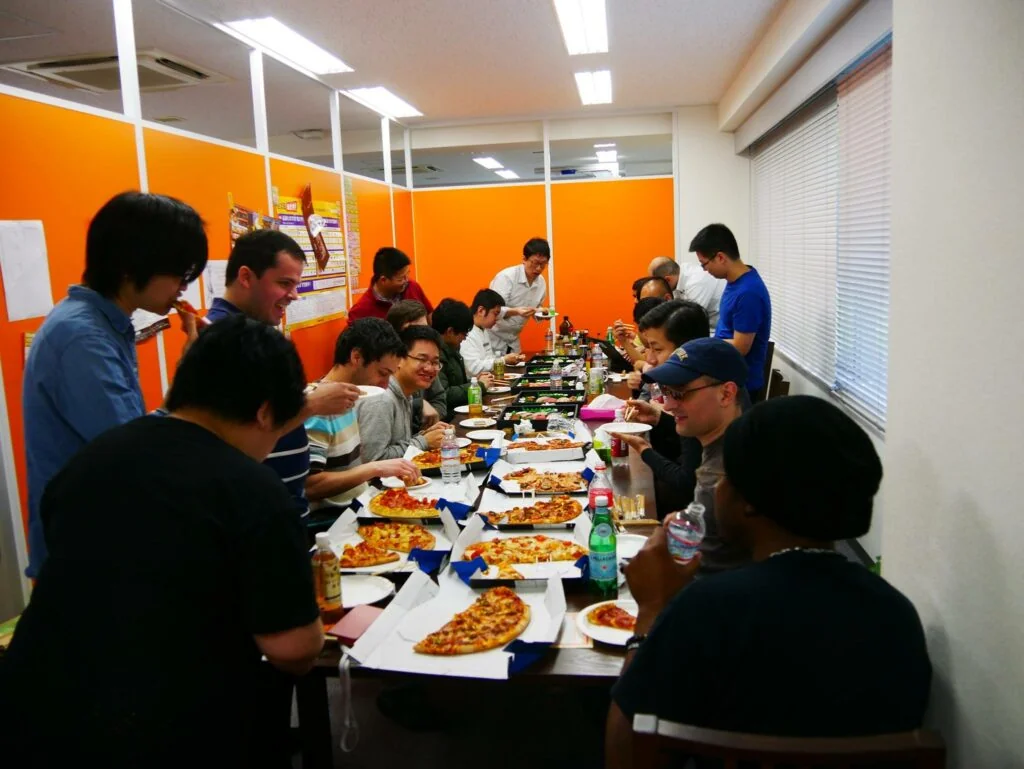
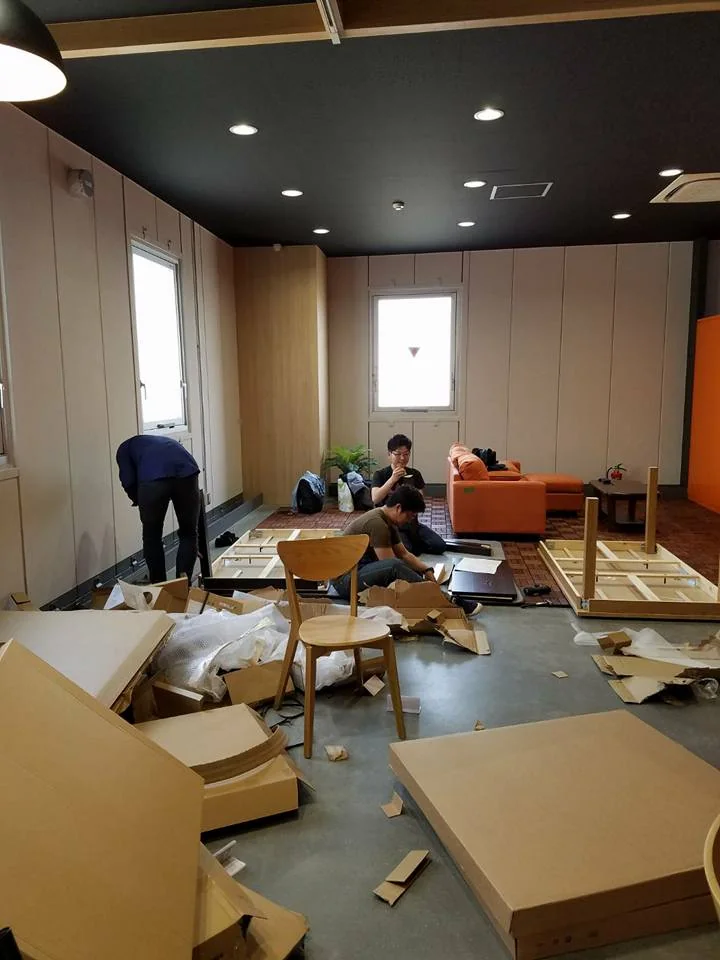
By May 2017, team headcount hit 40. Mujin relocated to a vast converted warehouse in Oshiage, near Tokyo Skytree. Equipped with a heavy industrial elevator, engineers could install full-scale industrial arms directly inside the facility.
It was in Oshiage that our signature cultural perks were born: daily buffet lunches prepared by our in-house Michelin-trained chef and our Swiss JURA espresso bar.
JD.com Shanghai: 40,000㎡ World’s First Unmanned Facility
Word of Mujin’s capabilities reached Chinese e-commerce giant JD.com (Jingdong), who proposed an audacious challenge: fully automating an entire 40,000-square-meter fulfillment center in Shanghai from end to end.
While such a facility would ordinarily require 500 manual pickers, Mujin orchestrated 20 industrial robots to handle receiving, scanning, sorting, packing, and palletizing. In February 2018, the world’s first fully automated logistics center went live, sorting 200,000 packages daily with just five technicians on site for supervision.
World’s first fully automated logistics warehouse (JD.com × Mujin, Shanghai)
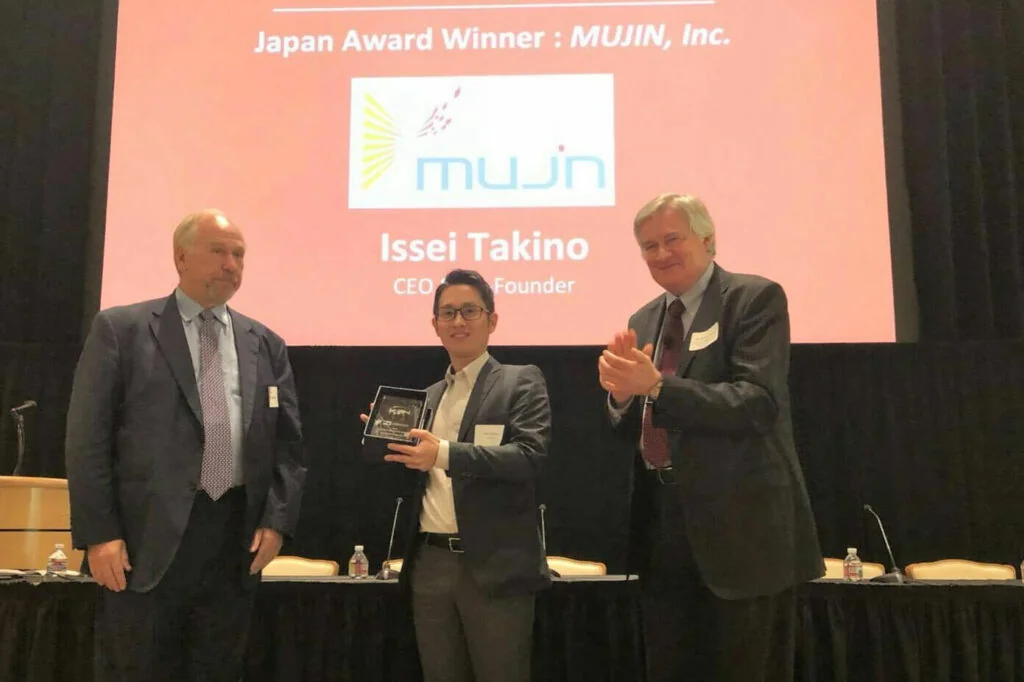
This milestone triggered global acclaim, earning Mujin four premier venture awards: the JEITA Venture Award, the Entrepreneur Award, the Japan Venture Award, and the Japan-US Innovation Award at Stanford.
6. Global Scale & Strategic Independence (2018–2019)
PALTAC: Depalletizing & Mixed Palletizing at Scale
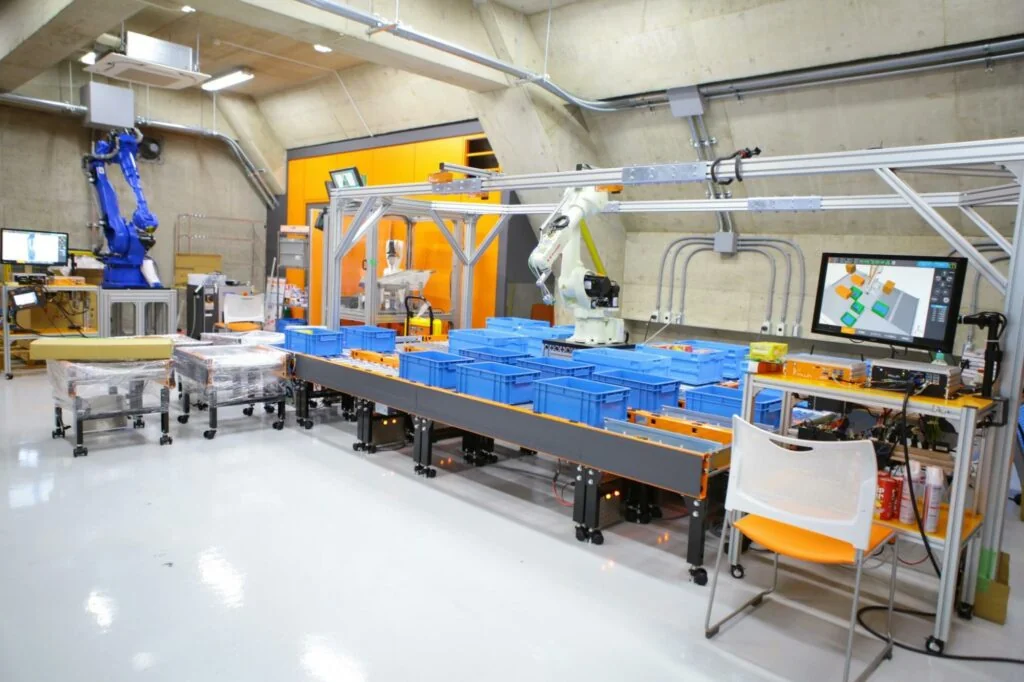
Building on piece-picking, Mujin tackled mixed-case depalletizing and palletizing. In summer 2018, leading daily-goods distributor PALTAC Corporation deployed four Mujin depalletizing robots at RDC Niigata to unload arbitrary carton cases from incoming pallets.
PALTAC RDC Niigata: Autonomous mixed-case depalletizing robots
In November 2019, at PALTAC’s RDC Saitama facility, Mujin followed with eight intelligent mixed-case palletizing robots, calculating optimal high-density packing patterns for roll cages and pallets in real time.
PALTAC RDC Saitama: Eight multi-axis mixed-case palletizing robots
Strategic MBO & 7.5 Billion Yen Financial Restructuring
In early 2019, Mujin completed a Management Buyout (MBO) to buy back shares from early venture capital investors (UTEC). This crucial decision secured permanent strategic autonomy for founders Issei and Rosen, backed by a 7.5 billion yen growth financing credit facility ensuring patient, long-term capital for heavy industrial R&D.
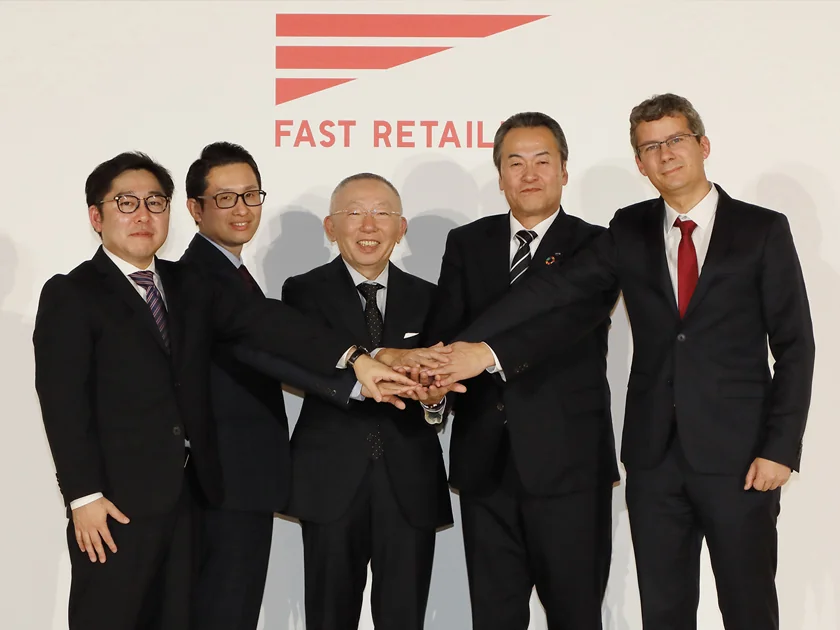
Global Supply Chain Alliance with Fast Retailing (UNIQLO)
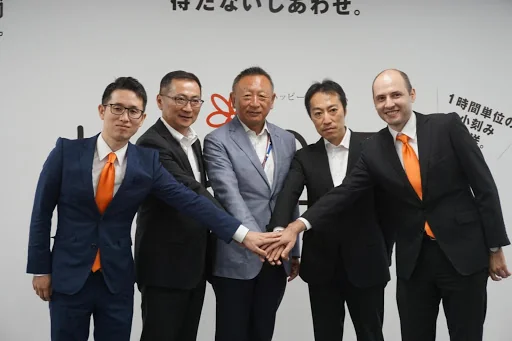
In November 2019, Fast Retailing (parent company of UNIQLO) signed a strategic global partnership with Mujin to automate its worldwide logistics network. Deformable, bagged apparel items had long stymied traditional automation; Mujin’s 3D perception and custom end-effectors solved the challenge.
Fast Retailing (UNIQLO) × Mujin: Global Supply Chain Automation
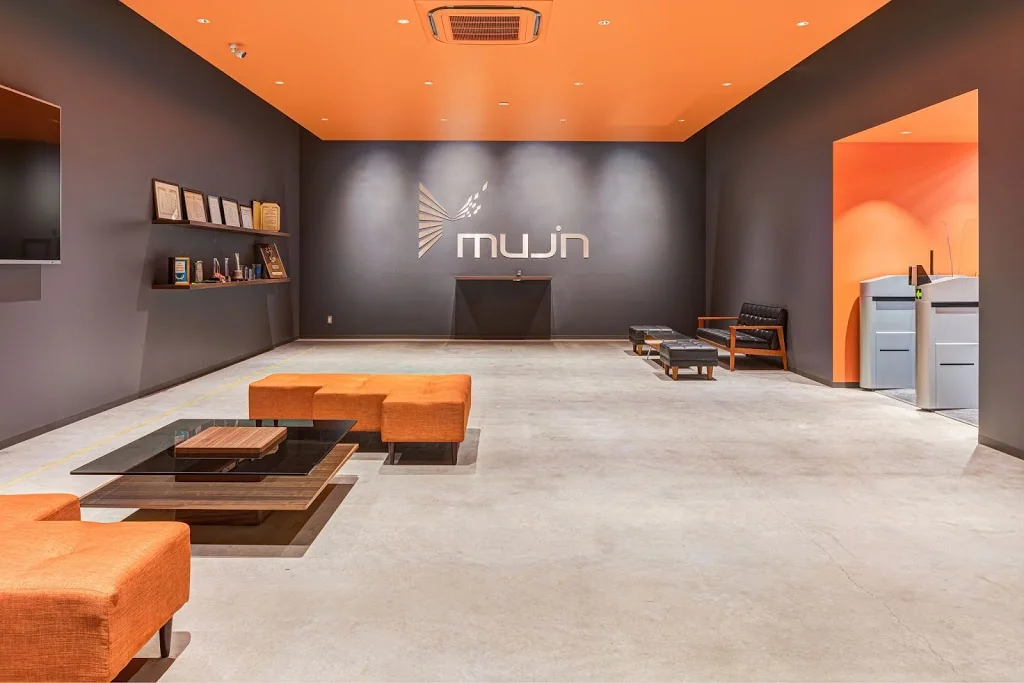
During this period, Mujin received seven major honors—including the Prime Minister’s Award, the JSME Medal for New Technology, and the Top 10 New Products Award. With the team growing past 100, Mujin relocated to its current headquarters in Tatsumi, Tokyo, featuring an expansive Robot Innovation Center and private fitness gym.
7. Global Footprint: US & Europe Expansion (2020–2022)

Entering North America: Mujin Corp. in Atlanta
Having demonstrated teachless robotic picking, palletizing, and depalletizing in Japan and China, Mujin turned to the world’s largest logistics market: North America. In May 2021, the company established Mujin Corp. headquartered in Atlanta, Georgia.
Staffed by local roboticists and systems engineers, Mujin Corp. brought real-time motion planning and intelligent automation directly to American supply-chain leaders, tackling severe labor shortages across sprawling cross-dock and e-commerce distribution centers.
Domestic Maturation & Rebranding
Simultaneously, Mujin strengthened its domestic footprint. In November 2020, Mujin opened its Nagoya Sales Office to support Japan’s automotive and advanced manufacturing heartland in Chubu. In February 2021, the company officially rebranded from 株式会社MUJIN to 株式会社Mujin—signaling its evolution into a mature, globally recognized robotics enterprise.
During this era, Mujin was recognized with multiple prestigious national honors:
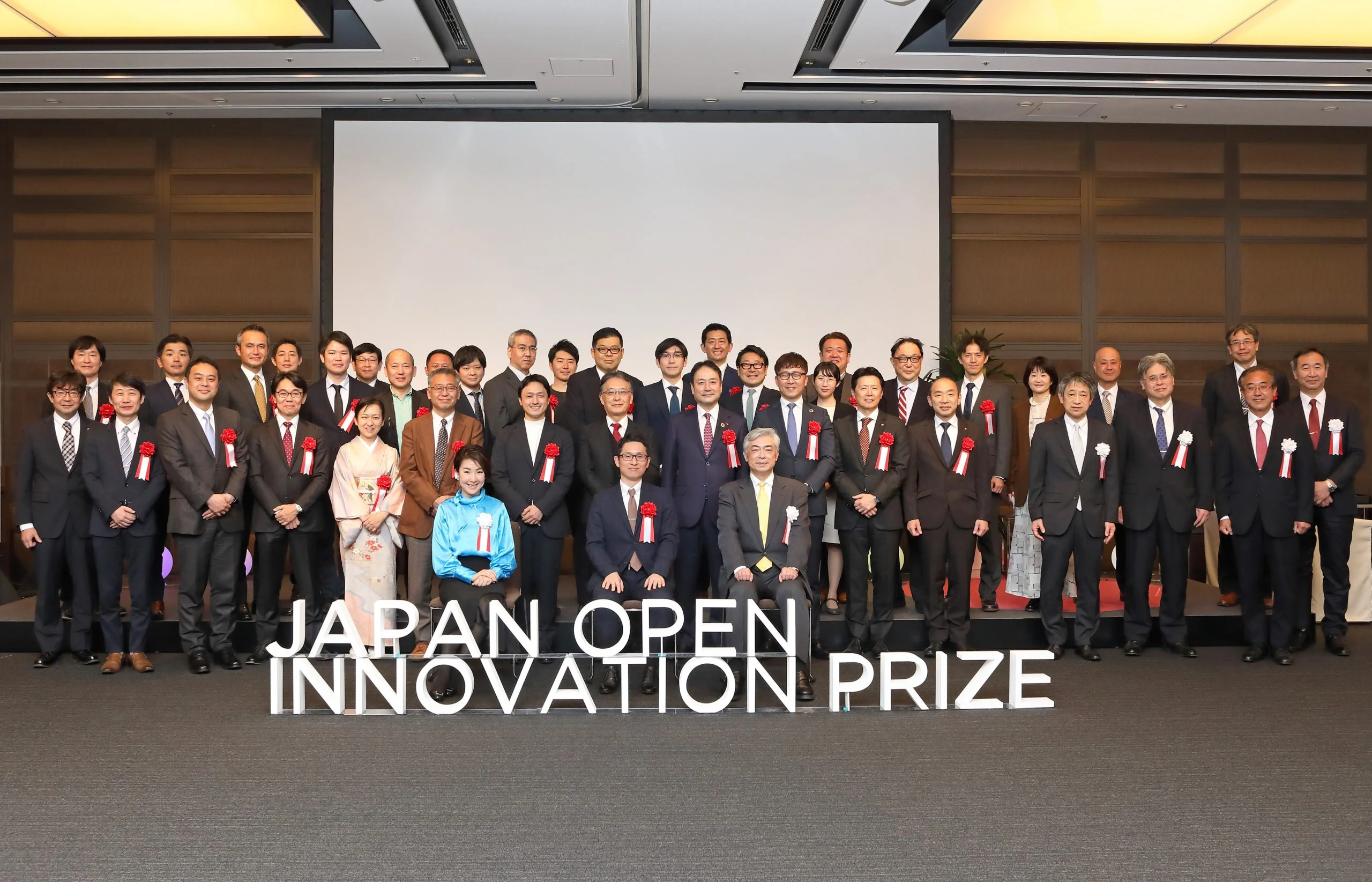
- Prime Minister’s Award (Grand Prize) at the 2nd Japan Open Innovation Awards (Feb 2020)
- MEXT Minister’s Award at the 9th Technology Management & Innovation Awards (Jan 2021)
- Robotics Innovation Award at the 38th Logistics Grand Prize (Sept 2021)
- CEO Issei Takino selected among Business Insider’s “100 People Transforming Business in Asia” (Sept 2020)
8. Landmark Series C & Accenture Joint Venture (2023–2024)

$104 Million Series C: Accelerating International Scale
In 2023, Mujin concluded a landmark $104 million (15 billion yen) Series C funding round across two closes in June and October. Backed by SBI Investment, Taiwanese electronics giant Pegatron, European industrial tech fund 7-Industries, and corporate partners, this capital fueled global scaling and core controller R&D.
In October 2023, Mujin officially inaugurated its European headquarters, Mujin Europe Holding B.V. in the Netherlands, establishing a localized engineering presence to support European manufacturers and logistics leaders.
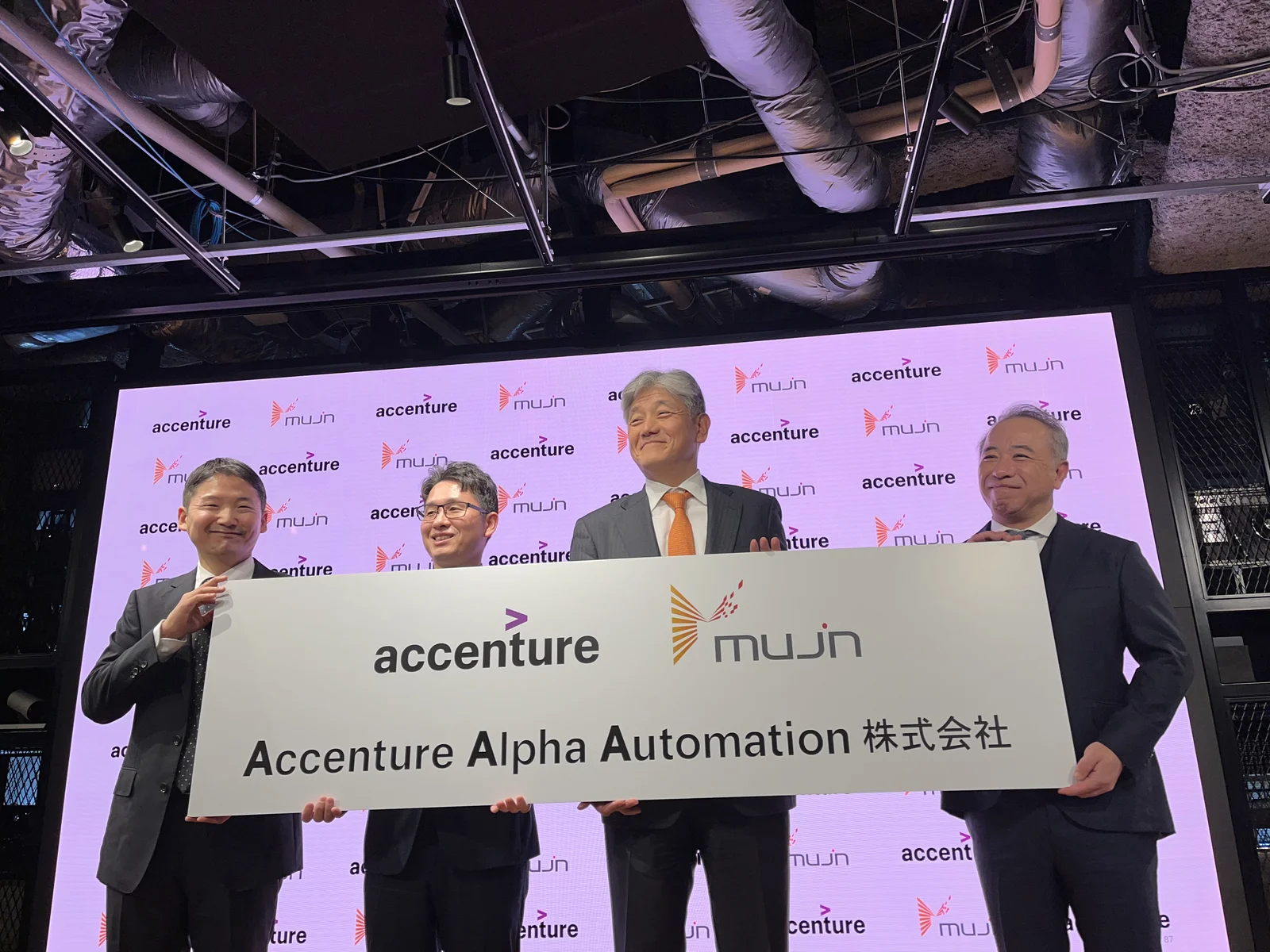
Accenture Alpha Automation & Mujin Japan
In January 2024, Mujin and global consulting leader Accenture announced the establishment of a joint venture: Accenture Alpha Automation, Inc. This partnership fuses Mujin’s edge-native robotic control and proprietary machine intelligence platform with Accenture’s enterprise digital transformation (DX) and system integration expertise.
To provide end-to-end total engineering and turnkey delivery for domestic clients, 株式会社Mujin Japan commenced official operational activities in April 2024 as a dedicated engineering powerhouse.
9. Physical AI & The MujinOS Era (2024–Present)
From Robot Controllers to the Universal Operating System
For over a decade, Mujin focused on mastering robotic arms—making individual manipulators see, think, and act. But modern warehouses and gigafactories demand more than isolated robotic cells: they require coordinated choreography across autonomous mobile robots (AGVs), automated storage and retrieval systems (ASRS), conveyors, and multi-robot cells.
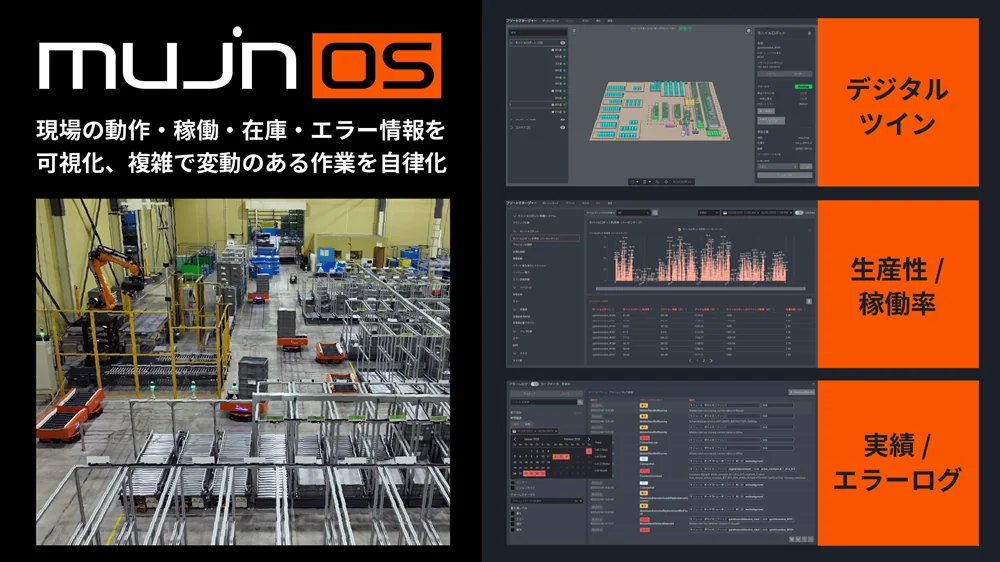
To achieve this, Mujin unveiled MujinOS: the universal digital-twin platform and operating system for industrial automation. Running real-time physics simulations with microsecond latency, MujinOS models entire physical facilities in digital space, dynamically routing workpieces and assigning tasks to hundreds of autonomous machines simultaneously.
$233 Million Series D: Pioneering Physical AI
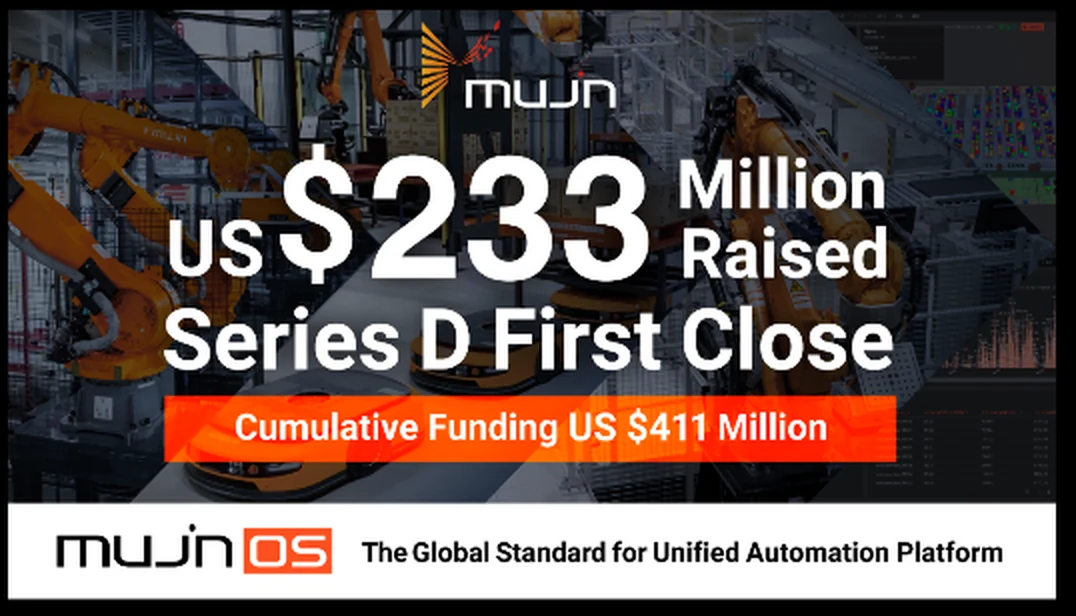
In its first close of Series D funding, Mujin secured $233 million (36.4 billion yen) to cement its position at the vanguard of Physical AI—the synthesis of edge computing, spatial intelligence, and industrial robotics.
Unlike purely digital LLMs or 2D image models, Physical AI must interact with the physical laws of inertia, gravity, and unpredictable entropy on factory floors without error. MujinOS represents the operating system that makes Physical AI practically deployable in mission-critical manufacturing and logistics worldwide.
🚀 The Frontier of Physical AI: Transforming Global Industry
From two founders and two laptops in a 41㎡ Koishikawa garage to powering the world’s most advanced automated fulfillment centers across Asia, North America, and Europe, Mujin has transformed how humanity approaches industrial automation.
Today, Mujin stands at the forefront of the Physical AI revolution. By unifying perception, real-time kinematics, and multi-agent coordination under MujinOS, we continue our unwavering mission: liberating humans from tedious, hazardous physical labor and empowering industries worldwide with true machine intelligence.
The future of autonomous robotics is being written today—and our journey has only just begun.
Explore More Mujin Stories & Culture
Mujin LOGO: The Hidden Meaning
CTO Rosen Diankov reveals the philosophy behind our emblem and name.
Lead Robotics Engineer Interview
Denys reflects on moving from Ukraine in 2012 to build Mujin from scratch.
Monthly All-Hands Meeting
How our 100+ global team stays unified behind our automation mission.
Want to build intelligent robotics systems that transform manufacturing and logistics worldwide?
Explore Mujin Careers
We are actively recruiting passionate engineers and specialists eager to revolutionize industrial robotics.